Contents
- Introduction
- What happened
- What the attacker site contains and how it is organized
- Infrastructure: WHOIS, TLS, subdomains
- Comments in the site and language analysis
- Site versions and the beacon
- The published source.zip
- Contents 1: What the beacon recorded
- Contents 2: The account list has 1,260 entries
- The claimed breakdown of “destroyed” accounts
- Email images and metadata
- The numbers: 4,352 and ¥7.7 billion
- Users’ PCs and the .rdp file
- Legal framework: a request is not an activation
- Unconfirmed
- Analysis notes
- IoC
- Summary
- What to do now
- Sources
source.zip the attacker published. We never displayed a victim’s IP address, email, account, or message text on screen.We split this incident into three articles: (1) this one, on the attacker site and the published files; (2) what was read from users’ PCs (samples.zip and lab tests); and (3) how to read the .rdp file, and what users should do.
Update: GMO’s 7th to 9th notices (up to the noon deadline on Oct 27)
Update: GMO’s 10th to 16th notices (through the night of Oct 29)
On October 19, 2026, GMO Internet Group started an investigation into “Onamae.com Desktop Cloud,” a cloud Windows service that was used to run automated FX trading. Users’ trading accounts showed trades they did not make.
This incident differs from an ordinary data breach in one way: the person who appears to be the attacker published “evidence” on their own site. The site has beacon source code, an Excel list of accounts, access logs, and screenshots of emails. We did not steal any of it. The other side put it out, so we can trace it.
This article is a record of re-reading those published files as primary sources. The first half follows the infrastructure and the second half checks the contents. We sort every number into one of four categories: official, claimed, confirmed by us, and unconfirmed.
What happened
This section is built only from GMO’s official announcements. All times are Japan Standard Time.
| Date | Event |
|---|---|
| 10/19 | Investigation started after inquiries from users |
| 10/20 | Confirmed that a third party had planted a malicious program on some servers. New sign-ups and the control panel were suspended |
| 10/21 04:00 | Servers on all plans were shut down in sequence |
| 10/22 | Consulted the police. Announced that trading-account login credentials may have been taken and used illegally |
| 10/24 | Announced that it had confirmed information was taken outside. Announced a goodwill payment and compensation, and asked the government to apply active cyber defense |
| 10/25 | The CEO’s blog explained the legal standing of the company and its response |
| 10/26 | The CEO’s blog was updated. The demand is US$50 million (about ¥8 billion), and the demand document is dated 10/21 11:57 |
GMO has acknowledged that the apparent attacker demanded money. The amount, US$50 million (about ¥8 billion), was published in the October 26 update to the CEO’s blog. GMO has not published a deadline. It has also said plainly that it will not comply. The goodwill payment is a flat ¥5,000 for every current user. Realized losses from unauthorized trades will be compensated. Users who move to a replacement service get 6 months free. All of this is official.
What the attacker site contains and how it is organized
The site is titled “通告 — onamae.com desktop cloud” (“Notice”). Besides the top page, it had four subpages. We read all of them from archived copies and did not connect to the live site.
| Page | Content | Our reading |
|---|---|---|
Top (index / index.php) |
Claim of responsibility, numbers, negotiation demands | Numbers and wording change between versions. Contains a 1×1 beacon |
timeline.php |
Timeline of the negotiation | URL sent at 10/21 11:55; “final warning, destruction begins” at 17:00 |
emails.php |
25 email images | HTML comment says “notices: 3” and “progress updates: 22” |
plan.php |
Upcoming plans | “85% remaining” and “83% remaining” appear on the same page |
accounts.html |
Display of the account list | Loads 2 JS files and fetches [email protected] from an external CDN |
The structure shows one item at a time: statement, timeline, evidence, plans, list. It looks like a reading room built to gain leverage in a negotiation. The numbers do not agree across pages, though (see below).
Infrastructure: WHOIS, TLS, subdomains
We looked only at public metadata and did not touch the site. We withhold the domain and IP in this article, to avoid steering readers to the site or causing accidental connections.
| Item | Value | Category |
|---|---|---|
| Registrar | Namecheap, Inc. | Confirmed via RDAP |
| Registered | 2026-08-31 15:26 UTC (= 9/1 00:26 JST) | Confirmed via RDAP |
| Expires | 2027-08-31 15:26 UTC | Confirmed via RDAP |
| Registrant | redacted (not public) | Confirmed via RDAP |
| Name servers | dns1/dns2.namecheaphosting.com |
RDAP, public DNS |
| Certificate | SSL.com. SAN contains only the domain and www |
Confirmed via crt.sh |
| Certificate issued | 17 minutes after registration (15:43 UTC) | Confirmed via crt.sh |
| Hosting | Namecheap shared server (LiteSpeed, US) | Existing urlscan observation |
| Co-hosted sites | 500 or more by reverse lookup (the API limit) | Third-party database |
| MX | mx1/2/3-hosting.jellyfish.systems |
Public DNS |
The certificate’s SAN contains only the domain and www, so no other site shows up from the same certificate. We found no subdomains other than www. The IP belongs to a shared server and is not the attacker’s. No person can be identified from it.
A certificate 17 minutes after registration is consistent with a rushed setup, but we can say nothing beyond that. The registrant is not public, so it is no basis for nationality or location.
Comments in the site and language analysis
The archived HTML and CSS contained comments that were not shown on screen. This part shows the hand of whoever built the site.
| Location | Text left in place |
|---|---|
| Top page HTML comment (v4) | “17% of customer accounts already destroyed,” “about ¥7.7 billion equivalent in 24 hours,” “destruction is still in progress,” “GMO’s only substantive reply: once, 10 minutes before the announcement” |
plan.php HTML comment |
“15% per 24 hours at the current pace. The rest is 7 days’ worth.” |
emails.php HTML comment |
“Notices: 3,” “progress updates: 22” |
| CSS comments | “call history,” “total column selection,” “multiple tables,” “table of contents,” “update timeline” |
The CSS comments are in fluent Japanese, with some English such as accounts panel, header, and layout mixed in. The body text, on the other hand, has broken phrases such as 「約 74 億万円」, 「各アドレスにずつ」, and 「返答えなかった」 (all quoted as in the original; the Japanese is garbled, and roughly they read “about 7.4 billion ten-thousand yen,” “to each address, each,” and “did not reply-ed”).
All we can say is that the code comments and the body text were written in different processes. “The Japanese is fluent, so the author is Japanese” and “it reads like machine translation, so the author is Chinese” are both unsupported. Language is not evidence of nationality.
Site versions and the beacon
The archived copies show 6 versions. The numbers and the presence of the beacon change from version to version.
| Version | Numbers visible | Beacon |
|---|---|---|
| v1 10/23 02:28 | 15% / about ¥6.6 billion / about 27,000 machines | Yes |
| v2 10/23 15:32 | 17% / about ¥7.7 billion | Yes |
| v3 10/24 12:36 | 17% / about ¥7.7 billion | Yes |
| v4 10/24 20:26 | Numbers disappear from the screen and remain in HTML comments | Yes |
| v5 10/25 12:28 | US$1 million | No |
| v6 10/26 06:32 | US$1 million (same content as v5) | No |
15% became 17% and ¥6.6 billion became ¥7.7 billion. Midway the numbers vanished from the screen and moved into comments, and finally the beacon was removed. The beacon existed, and it was removed. We confirmed this from the actual versions.
The “US$1 million” in v5 and v6 differs by a large factor from the demand GMO published (US$50 million). The site’s text alone does not settle which amount refers to what.
The published source.zip
The top page hosted source.zip: 1,354,131 bytes, 48 entries.
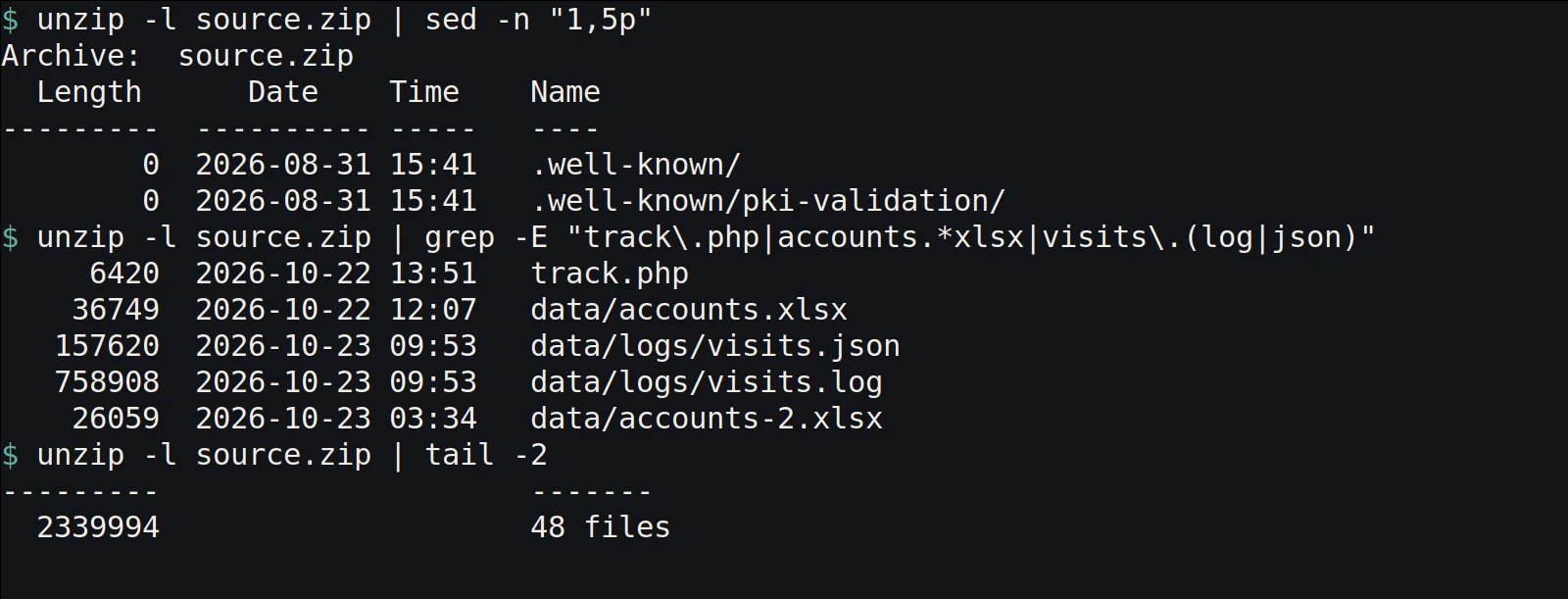
source.zip. It holds the beacon implementation, the account lists, the access logs, and 25 email images.The SHA-256 of the file we fetched again matched our record from October 26, 2026. It is the same file. From here we read the code and data inside it.
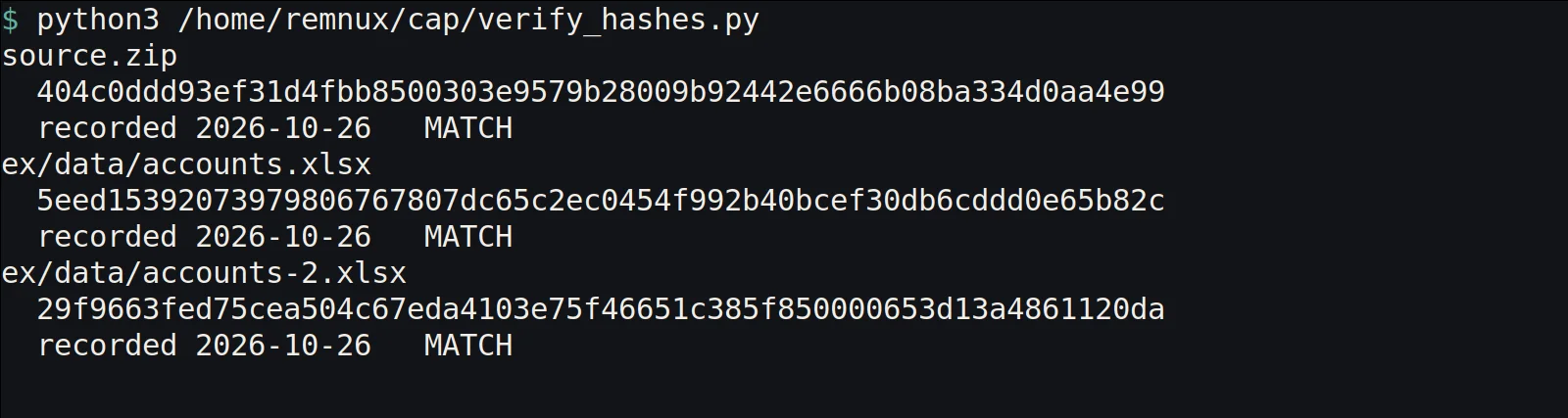
source.zip, accounts.xlsx, and accounts-2.xlsx match the record (MATCH).Contents 1: What the beacon recorded
track.php pretends to return a 1×1 image while recording the time, IP, IP hash, bot determination, page name, User-Agent, and Referer. Two points here are hard to overlook.
The salt is still the default
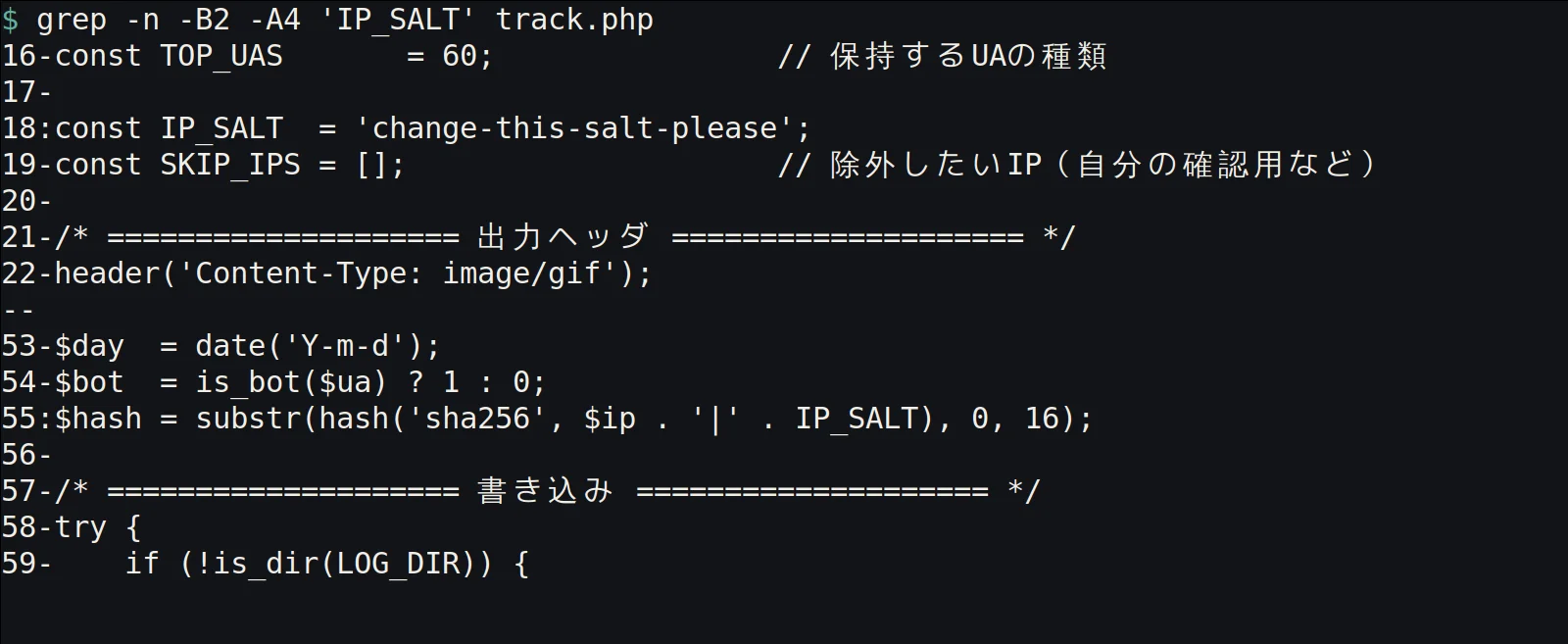
IP_SALT = 'change-this-salt-please'. It is still the default string and was not changed.The hash is the first 16 hex digits of SHA-256, and the salt is known. Brute force can recover the original IP. Hashing does not make it safe.
The IP can be spoofed with headers
client_ip() trusts CF-Connecting-IP, X-Forwarded-For, X-Real-IP, and REMOTE_ADDR, in that order. So anyone who sets a header can change the IP that gets recorded.
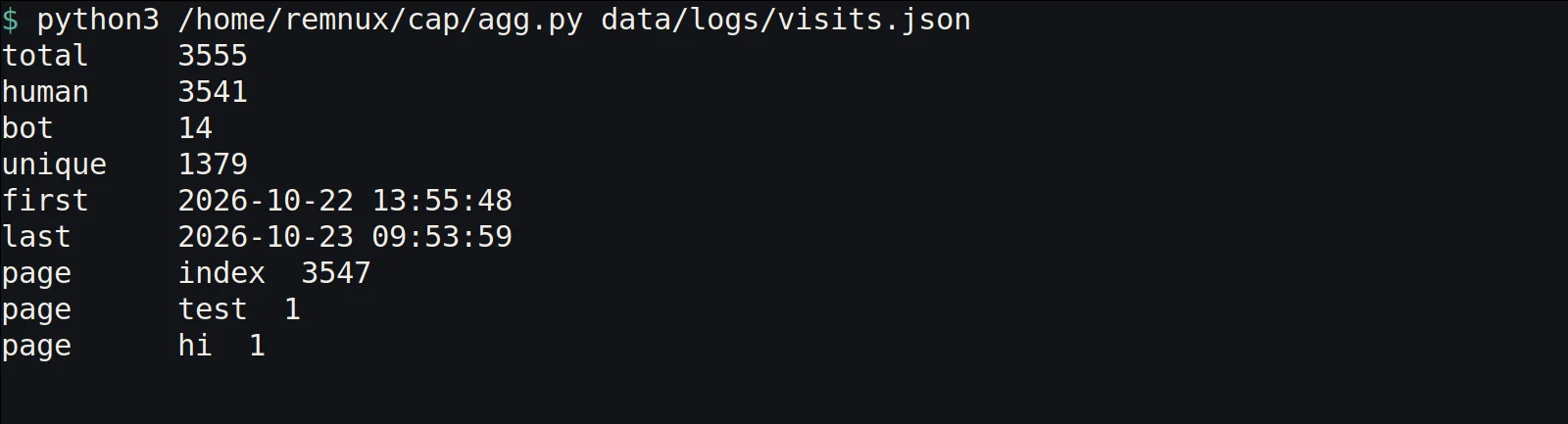
1,379 does not mean 1,379 people looked. IPs are shared and can be spoofed. It is the number of unique hashes, and we can say nothing more.
Still, that is 3,555 hits in about 20 hours. The beacon is only on the top page, and almost every page was index. The attacker ended up publishing their own visit log.
Contents 2: The account list has 1,260 entries
The metadata of accounts.xlsx was as follows. We did not read any cell values.
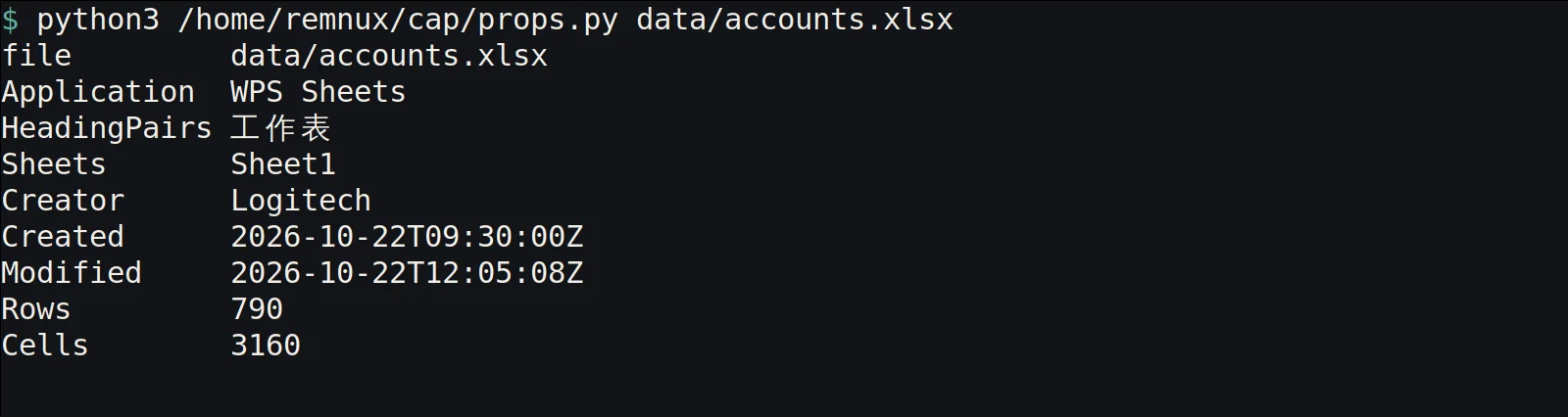
accounts-2.xlsx has 472 rows and 1,888 cells. Adding the two and subtracting the 2 header rows gives 1,260 entries.
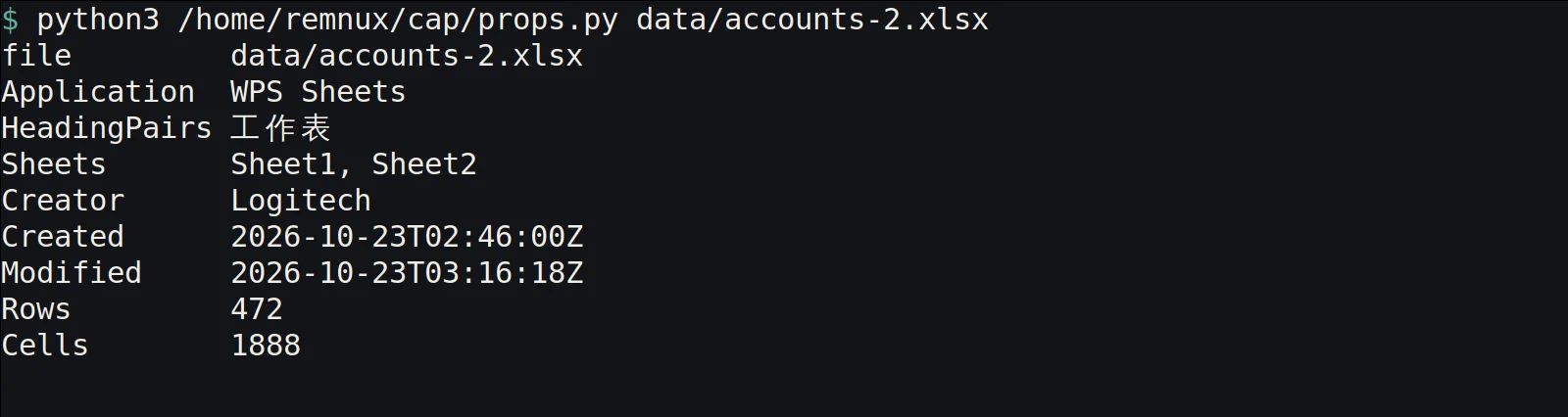
accounts-2.xlsx has 472 rows. 790 + 472 − 2 = 1,260.WPS Sheets and 工作表 show that the file was made with Chinese-made office software. We still cannot say anything about nationality. Evidence about an environment is separate from a person’s nationality.
The claimed breakdown of “destroyed” accounts
The attacker claims to have “destroyed 17% of 140,000 accounts.” We lay out that breakdown using only the numbers written on the site. This is a claim, not something we confirmed.
| Claim | Calculated as stated | Cross-check |
|---|---|---|
| About 140,000 accounts (over 90,000 live, over 50,000 demo) | n/a | GMO has not published an account count |
| 17% destroyed | 140,000 × 17% = about 23,800 | The published list has 1,260 entries (0.90%) |
| 83% remaining | about 116,200 | n/a |
| 15% in 24 hours | about 21,000 accounts/day | 83% at 15%/day is about 5.5 days. The site says “7 days’ worth” |
| About ¥7.7 billion in 24 hours | With 1,260 entries, about ¥6.11 million per account | With 23,800 accounts, about ¥320,000. Which is right is unknown |
| Balance of US$280 million | × 17% = about US$47.6 million | About ¥7.5 billion. A back-calculation from the percentage |
We cannot give a breakdown by brokerage. We did not read the cell values of the account list (PII). All we know is the percentages the attacker claimed and the row count of the published list. Mixing these would read as if we had confirmed “a breakdown of 23,800 people.”
Email images and metadata
emails.php had 25 Gmail screenshots. There are no .eml or .msg files, so SMTP headers cannot be analyzed.
We did not obtain the sender’s email address. From the header area at the top of each image we OCR’d only the date and time. We did not read recipients, senders, or body text, because victims’ or third parties’ addresses may appear. We therefore do not publish them here either.
What we can say is the structure from the HTML comment (“notices: 3,” “progress updates: 22” = 25 images) and the displayed times. mail-01 shows Oct 21 2:55 AM and mail-02 shows 5:07 AM.
Gmail displays times in the viewer’s own time zone, so the images alone do not settle what time it was in Japan. Read as UTC, they are 11:55 and 14:07, close to the “URL sent at 11:55” in timeline.php and the time GMO gave for the demand document (11:57). Read as US Central daylight time (UTC−5), they are 16:55 and 19:07, which fits the body text of mail-01, “from 17:00 today.” We choose neither, because we do not have the original headers. We cover this in more detail in article (2). The time zone can be changed in settings, so neither reading is evidence of location.
For the metadata, the xlsx files show WPS Sheets, 工作表, Logitech, 790 rows / 3,160 cells (the second: 472 rows / 1,888 cells). The email images are RGBA 8-bit and carry no software name or DPI information.
The numbers: 4,352 and ¥7.7 billion
This incident was one where numbers easily took on a life of their own. We sort them out first.
| Number | What it counts | Category |
|---|---|---|
| 26,739 | Servers that could be affected (note in GMO’s 3rd notice) | Official |
| 1,260 | Rows in the account list | Confirmed by us |
| 4,352 | Copies recorded in the samples.zip log (10 machines) |
Confirmed by us |
| 3,555 / 1,379 | Beacon hits / unique IP hashes | Confirmed by us |
| About ¥7.7 billion | Damage claimed by the attacker | Claimed |
26,739 is a count of servers, not of victims. It is more than 20 times the size of the published list (1,260 entries), but the actual number of victims has not been published. GMO itself notes that it is “not the number of cases where unauthorized access or information theft was confirmed,” so we follow the official statement.
The attacker says “about ¥7.7 billion in 24 hours.” The same site also has a figure of ¥4.2 billion. They do not agree. We have not summed the balances in the published list, because we did not read the cell values.
Why? The attacker claims a total balance of US$280 million. 17 percent of that is about US$47.6 million, about ¥7.5 billion at the rate at the time. That is a figure back-calculated from a percentage, not the actual total of the accounts. We are not saying flatly that “¥7.7 billion is a lie.” The point is only that the numbers within the site do not agree with each other.
Users’ PCs and the .rdp file
The site had one more published file: samples.zip, work logs from reading 10 users’ PCs. We split its summary, plus the lab tests of RDP drive redirection and DPAPI, into article (2). How to read the .rdp file the attacker showed as proof of “GMO’s negligence,” and what users should do, are in article (3).
Legal framework: a request is not an activation
In its 4th notice on October 24, GMO announced that it had asked the government (a formal recommendation) to apply active cyber defense. In the CEO’s blog the next day, GMO explained that it made the recommendation while understanding two points raised publicly: that it is not a designated critical infrastructure operator, and that the measure is not something the government acts on at a private company’s request but something the government decides on its own initiative. The Cabinet Office list, as of July 2026, covers 15 sectors and 258 companies. GMO is not on it.
So talk such as “they asked, so the government should move” or “it is wrong that the government did not move” starts from the wrong premise about the system. A request and an activation are separate things. What measures the government actually took is unconfirmed.
Unconfirmed
- The claim that distributed
.rdpfiles containeddrivestoredirect:s:*by default. This is the attacker’s claim, and GMO’s announcements do not mention it. We have not confirmed it either - Which line the standard Windows connection software uses when
drivestoredirectappears twice. FreeRDP uses the later line (article (3)) - The intrusion route. On their own site the attacker claims that “the VPS group was connected in a single Active Directory environment, and it was possible to move from one VPS to another.” It also claims that one admin-level account worked on every VPS, and that when a support engineer connected to a customer’s PC, the customer could pull that account’s credentials (post of Oct 24). Both are the attacker’s claims; GMO has not addressed them and we could not confirm them. GMO says it is investigating the route and has not published a cause (through the 6th notice)
- The attacker’s location. Neither time zone nor language is evidence of nationality
- The government’s actual measures
.rdp files. There is no guarantee the results will be published, so the attacker’s claims may stay unconfirmed (follow-up). On government measures, the Asahi Shimbun and Jiji Press reported on Oct 29 that the Ministry of Internal Affairs and Communications asked carriers to block the site, but we have not seen an official document.Analysis notes
From here on this is our reading, not fact. We do not assert it.
Why publish their own evidence? The natural reading is to gain leverage in the negotiation. Showing the account list and emails makes people believe “they really have it.” In fact, they added the demand amount and a deadline later. The motive is unknown, though. It is also too early to assume money was the goal.
Why the numbers do not agree. On the same site, ¥7.7 billion, ¥7.4 billion, ¥6.6 billion, and ¥4.2 billion are mixed together, and “85% remaining” and “83% remaining” sit on the same page. Exaggeration, mixed tools, and machine translation are all possible. Still, internally contradictory numbers cannot be treated as fact. This is a fact that works against the other side.
The word “destruction.” Did they delete data, or take over accounts and make unauthorized trades? The site’s wording alone does not settle it. GMO’s 4th notice describes the content of the threat as “damage to account balances through unauthorized orders.” Reading it as reducing balances through unauthorized trades, not deleting data, is consistent with the official account. Mixing the two gets the nature of the damage wrong.
The infrastructure is crude. Shared hosting, a default salt, a certificate 17 minutes after registration, a hidden WHOIS. They meant to hide, but the build is rough. The damage is large anyway because the entry point was weak: RDP drive redirection, reused passwords, and no multi-factor authentication. We lose on our own settings, not on the attacker’s skill.
Language analysis is not about nationality. The comments are fluent Japanese and the body reads like machine translation. The most we can say is that the processes differ. Tying this to nationality would hurt people who have nothing to do with the incident.
This is as far as we can go. Identifying an individual takes provider logs and a criminal investigation. What public information can do is draw the line between “this much is known” and “beyond this is not known.” An article that does not draw that line is the most dangerous kind.
IoC
These are values for reproduction and matching. We do not list domains or IPs (to avoid steering readers or causing accidental connections).
| Type | Value | Note |
|---|---|---|
| Distributed file | source.zip / SHA-256 404c0ddd93ef31d4fbb8500303e9579b28009b92442e6666b08ba334d0aa4e99 |
1,354,131 bytes, 48 entries |
| Account list | accounts.xlsx / 5eed15392073979806767807dc65c2ec0454f992b40bcef30db6cddd0e65b82c |
36,749 bytes |
| Account list 2 | accounts-2.xlsx / 29f9663fed75cea504c67eda4103e75f46651c385f850000653d13a4861120da |
26,059 bytes |
| Samples | samples.zip / 8f1b1174270b79e3faedac1f44626360006a753bbcdde850deea150093eada58 |
235,002 bytes (not fetched again) |
| File names | track.php / data/logs/visits.log / data/logs/visits.json / data/mail-01.png to mail-25.png |
Layout inside the zip |
| Beacon | /track.php?p=index |
1×1, opacity:0, pointer-events:none |
| Default salt | change-this-salt-please |
Not changed |
| Page title | 通告 — onamae.com desktop cloud |
Top page |
| Registration | Namecheap / dns1/dns2.namecheaphosting.com / SSL.com |
WHOIS not public |
Summary
This incident was not about whether to believe or doubt a roundup. Going down to the primary sources and re-reading the published evidence changes what the numbers mean.
- 26,739 is not a count of victims. It is the number of servers that could be affected
- 1,260 entries in the account list, 4,352 copies ((2)), and 3,555 hits are three different numbers
- ¥7.7 billion is a back-calculation from a percentage, and it does not agree with other numbers on the site. That unauthorized trades occurred, however, is officially acknowledged by GMO
- Turn off RDP redirection. Both reading and writing are possible (lab test in (2))
What to do now
The steps are in article (3). Here are only the key points.
- Change the passwords for your trading account and trading tools from a device you have not used for FX trading, and turn on two-step verification
- Do not double-click any
.rdpfile you have. Open it in Notepad and check everydrivestoredirectline - Do not open emails from someone claiming to be the attacker, do not reply, do not pay, and do not send files
Sources
- GMO インターネットグループ 第 1 報(お名前.com)www.onamae.com/news/article/11584
- 同 第 2 報group.gmo/info/alert/20261022/
- 同 第 3 報group.gmo/info/alert/20261023/
- 同 第 4 報group.gmo/info/alert/20261024/
- 同 第 5 報group.gmo/info/alert/2026102402/
- 同 第 6 報(2026-10-26 21:00 時点)group.gmo/info/alert/20261026/
- 代表ブログ(2026-10-25、10-26 追記)www.kumagai.com/?eid=19600
- 内閣府 特定社会基盤事業者一覧(2026 年 7 月時点)www.cao.go.jp/keizai_anzen_hosho/suishinhou/infra/doc/infra_jigyousya.pdf
Checked on 2026-10-26